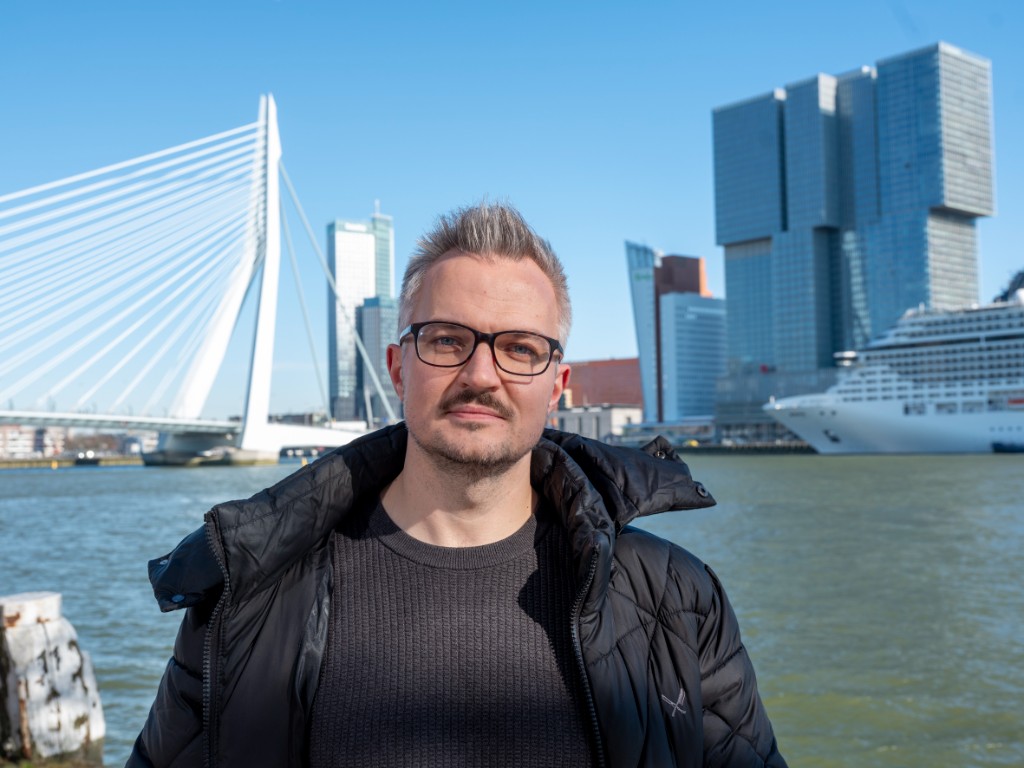
Scientific AI expertise for healthcare, biomedical innovation, and responsible data-driven products.
I work with startups, SMEs, hospitals, research groups, and innovation consortia to translate advanced AI into scientifically sound, privacy-aware, and clinically meaningful solutions. My focus is on the methodological depth, validation strategy, and responsible design that turn promising prototypes into trustworthy products.
At the intersection of AI research, biomedical data science, clinical translation, and startup strategy.
My consultancy and advisory activities are an extension of more than ten years of academic work in machine learning, biomedical imaging, multi-omics, and large-scale population data analysis. I help organizations build AI that is not only performant on a benchmark, but defensible scientifically, robust in real-world data, aligned with privacy and regulatory expectations, and useful inside clinical and research workflows.
I typically engage with teams that want senior scientific input on direction-setting questions: which AI problem is actually worth solving, how to design a credible validation strategy, how to handle sensitive health data responsibly, and how to bridge research, hospitals, startups, and investors.
Senior scientific input across strategy, methodology, validation, and translation.
Defining where AI can realistically add value in a clinical, biomedical, or population-health context โ and where it cannot. Roadmaps, problem framing, data readiness, and risk-aware prioritization.
Designing benchmarking, evaluation, and external validation strategies that hold up to scientific and regulatory scrutiny. Avoiding common pitfalls in leakage, bias, and overfitting to single cohorts.
Building models that are not just accurate, but interpretable, auditable, and aligned with how clinicians and researchers actually reason. Bridging algorithmic transparency with domain expertise.
Architectures and methodologies for analyzing sensitive health data across institutions without centralizing it โ including federated learning, privacy-by-design pipelines, and secure multi-center studies.
Combining genomics, imaging, clinical records, and population data into coherent analyses. Building models that respect data structure, scale, and heterogeneity instead of forcing one-size-fits-all pipelines.
Scientific advisory work for startups, research-driven SMEs, hospitals, and public-private consortia. Strengthening scientific credibility, methodology, partnerships, and translation into real biomedical settings.
Strengthening scientific credibility, methodology, validation, and responsible AI design.
I contribute to advisory boards and provide strategic scientific guidance to companies and organizations developing AI and data-driven healthcare technologies. My role is typically to act as a senior scientific sparring partner โ challenging assumptions, sharpening the research strategy, and ensuring that what is built can stand up to peer review, clinical scrutiny, and the realities of biomedical data.
Concretely, advisory engagements tend to focus on:
I prefer engagements where scientific depth is genuinely valued and where the goal is durable, defensible technology rather than short-term narrative.
A representative example of the kind of advisory work I aim to support.
OASYS NOW is a Dutch healthtech startup building AI-native, privacy-by-design infrastructure for personalized health and secure use of health data. Their work spans products and platforms such as ELaiGIBLE, De-ID, GRIP, and CoMPai, addressing core challenges in making sensitive health data usable without compromising privacy.
OASYS NOW won Slush 100 in 2024 โ one of Europe's most visible startup competitions โ and secured a โฌ1 million investment from General Catalyst and Cherry Ventures.
I serve as a scientific advisor / advisory board member, contributing to the scientific direction around privacy-preserving analytics, federated approaches, and clinically relevant AI. The engagement reflects the type of work I aim to support: scientifically grounded AI, privacy-aware health data use, and infrastructure that can credibly scale across institutions and clinical settings.
Erasmus MC, Rotterdam, Delft, and the broader Dutch healthtech and entrepreneurship community.
A large part of what makes scientific advisory work effective is being embedded in the right ecosystem โ close to clinical practice, deep technical expertise, data infrastructure, and the people building new ventures around them. My activities are anchored in Rotterdam and connected across the Dutch health and innovation landscape.
One of Europe's largest research medical centers, with deep expertise in epidemiology, imaging, genomics, and clinical AI โ the environment in which my group operates.
Co-founder of the Society for Quantitative Artificial Intelligence Research at Erasmus MC, bringing together AI, ML, clinical, and biological communities across departments.
Part of the Rotterdam healthtech ecosystem, connecting medical, technological, entrepreneurial, and innovation communities around Erasmus MC and the surrounding institutions.
Engaged with Graduate Ventures, an alumni-driven startup platform connecting the Delft and Rotterdam ecosystems to support founders building research-rooted ventures.
Active in cross-institutional work with TU Delft and Erasmus University Rotterdam, including teaching and research collaborations spanning AI, nanobiology, and computational science.
Involved in national AI strategy for biomedical research and innovation, including programme management work on AI translation across Dutch university medical centres (UMCs) and international consortia such as CHARGE.
Scientific depth, translational experience, and the ability to bridge very different stakeholders.
If you are a startup, SME, hospital, research group, or public-private consortium working on AI for healthcare or biomedical research, I am open to selected advisory, strategy, validation, and collaboration discussions.