CraniumPy
Clinical GUI / PythonAn end-to-end, open-source mesh processing tool for 3D craniofacial analysis. Transforms raw 3D images into harmonized meshes with automated cephalometric extraction and registration.
Computational Population Biology Group
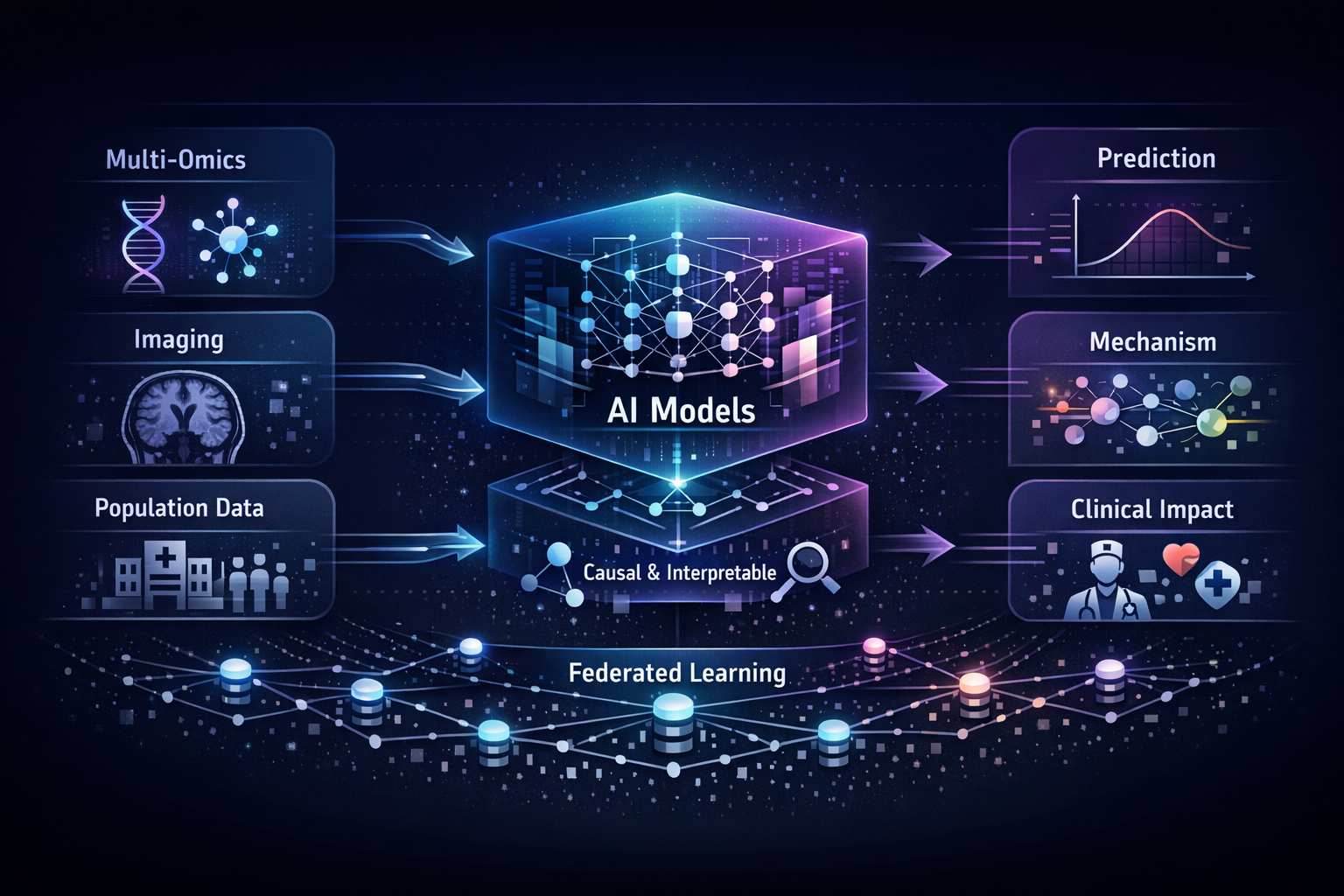
AI for population biology: from data to mechanism to medicine.
Erasmus MC Medical Center
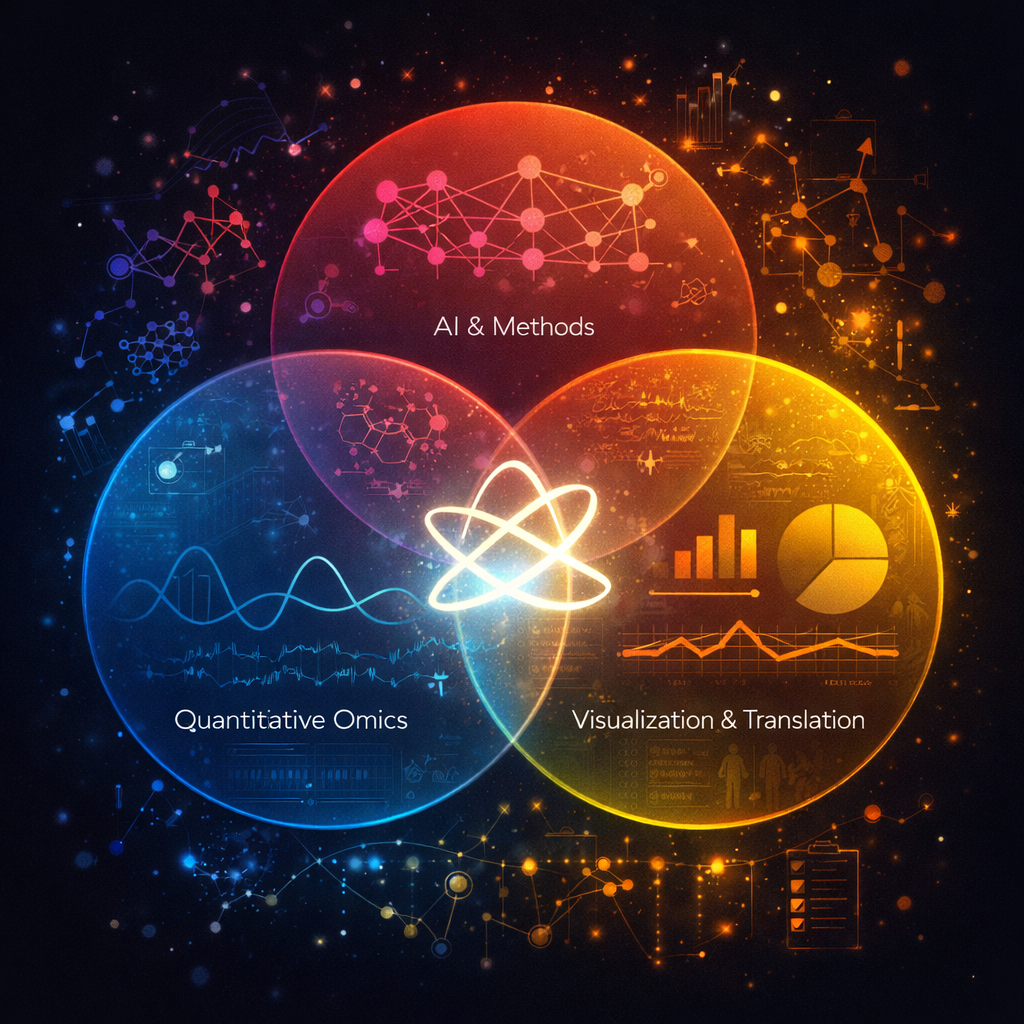
Human health is written across genomes, images, and lifetimes of exposure and care. In our group, we study how these layers fit together in large population cohorts such as the Rotterdam Study and Generation R, and how they can be translated into models that are both predictive and biologically meaningful. We connect molecular variation to organ-level structure and function, and population context to risk, using integrative methods that combine multi-omics, quantitative imaging, and longitudinal clinical and lifestyle data with international consortia. The aim is not prediction alone, but a clearer path from population evidence to mechanism, and from mechanism to prevention and precision medicine.
The group consists of PhD candidates, postdoctoral researchers, and research engineers working at the interface of epidemiology, AI, and imaging. Dr. Roshchupkin manages the research cluster at the Department of Epidemiology, anchoring the group’s computational programme within Erasmus MC’s population-health infrastructure. Projects are typically embedded in large cohort studies and international collaborations, combining methodological development with applied research.
Embedded collaboration with the Biomedical Imaging Group Rotterdam (BIGR): large-scale imaging science, GPU computing, and infrastructure for AI-driven discovery.
Prospective resources including the Rotterdam Study (ERGO) and training through NIHES, extended via meta-analysis and international harmonization.
Large population cohorts are one of the few places where genetics, imaging, and clinical data come together at scale. We use resources such as the Rotterdam Study and international consortia to model disease risk across the lifespan, combining multi-omics, imaging, and longitudinal clinical data. A key challenge is that these datasets are heterogeneous and evolve over time, so our models explicitly account for population structure, cohort differences, and longitudinal dynamics.
High capacity models can fit data without explaining it. We prioritize interpretability as a scientific output: attributions and structured representations that researchers can interrogate, not only dashboards. Epidemiological reasoning is embedded in model design and evaluation—explicit attention to confounding, selection, and measurement error—so that performance gains translate into claims that survive scrutiny. In practice, this means building models that remain stable across cohorts, imaging protocols, and definitions, and that can be interpreted by domain experts rather than only optimized for performance.
Genetic association is a starting point. We connect population signals to function—especially in the non-coding genome—by combining statistical genetics with models that highlight where and how variation may act. Quantitative brain MRI (structure and connectivity), musculoskeletal imaging, and related traits give a concrete bridge from variants to intermediate phenotypes. From there we move toward hypotheses about pathways and contexts that can be tested across data types and cohorts.
Science advances when data can be used without being centralized. We build federated and privacy-preserving pipelines—including production-style workflows on NVIDIA Clara–based infrastructure—so models can be trained and validated across sites under governance constraints. Coordination within major international networks keeps methods aligned with shared scientific goals. Open software and reproducible workflows remain part of the research product: tools other groups can adopt, extend, and benchmark.
GenNet is our open-source Python framework for interpretable deep learning in genomics. Its explainable AI module incorporates established ML interpretability methods such as Grad-CAM, enabling biologically informed attribution alongside phenotype prediction.
View all on Google Scholar / PubMed
We actively contribute to international consortia by developing AI methods for large-scale data integration, interpretation, and prediction across population cohorts—from multi-omics and imaging through to questions that matter for biology and clinical translation. Software packages and deep learning frameworks in the lab are developed natively in Python.

GenNet: network architecture
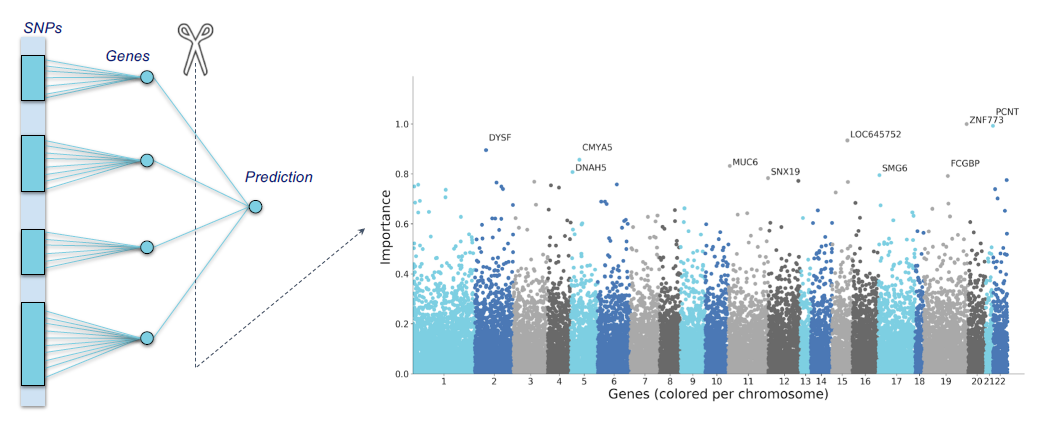
GenNet: explainable AI module (e.g. Grad-CAM attributions)
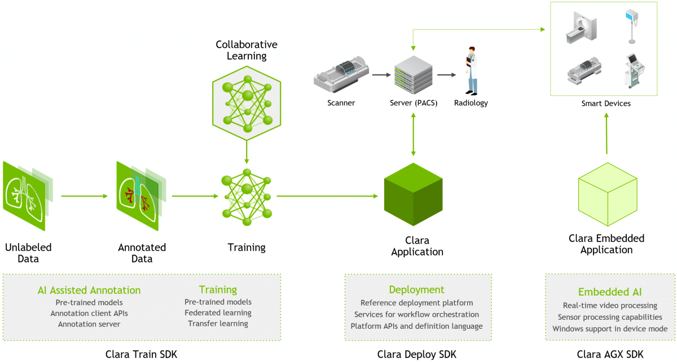
NVIDIA Clara framework for federated learning
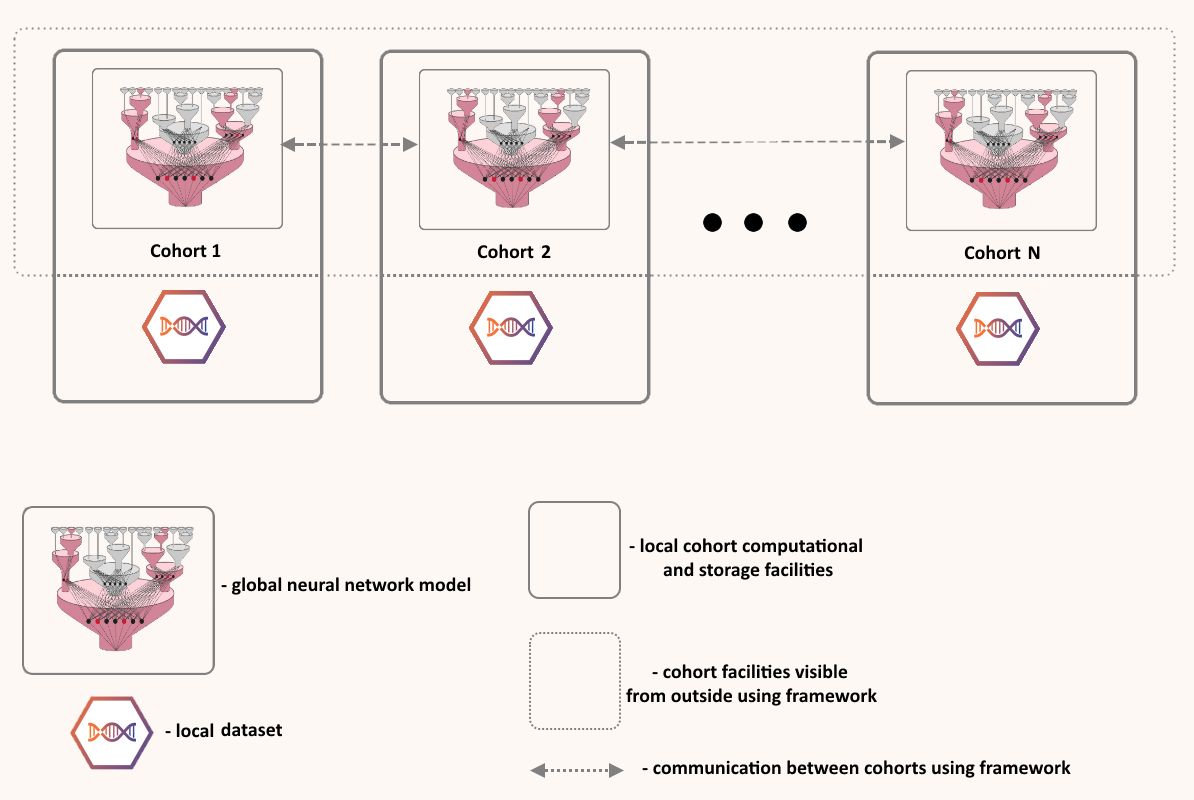
GenNet Python pipeline for federated learning
We derive and analyze endophenotypes from high-dimensional imaging: structural MRI, DTI, connectome and resting-state fMRI, OCT, 3D craniofacial and musculoskeletal shape, and related quantitative traits—linked to genetics and epidemiology in population studies.

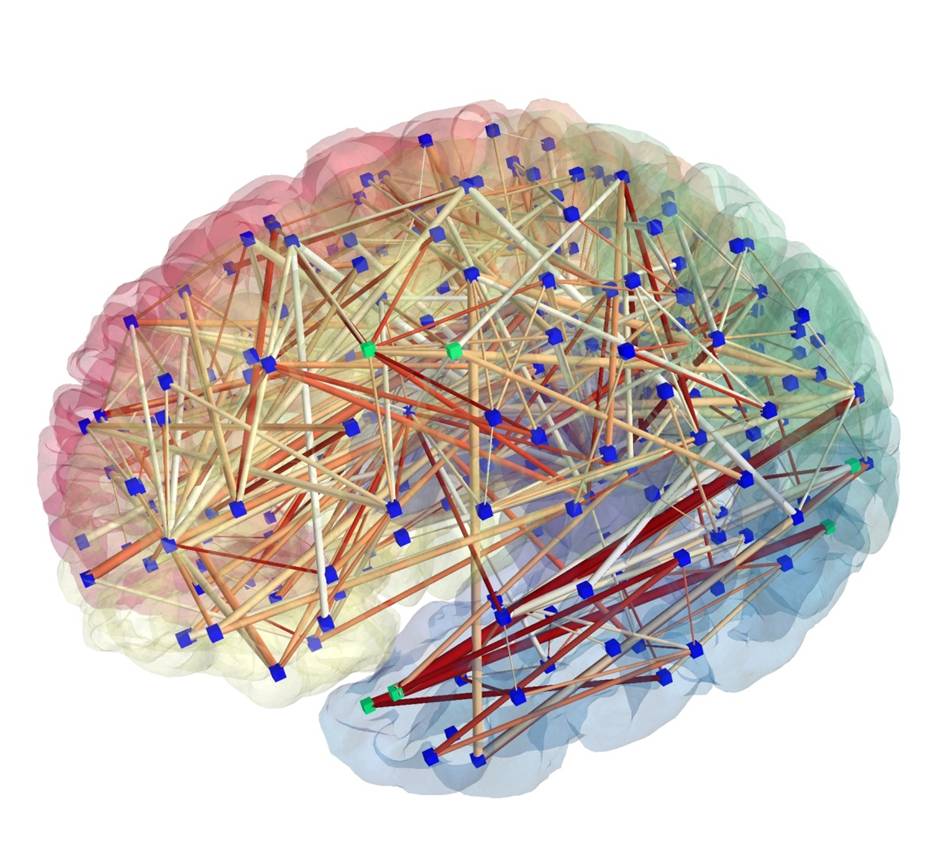


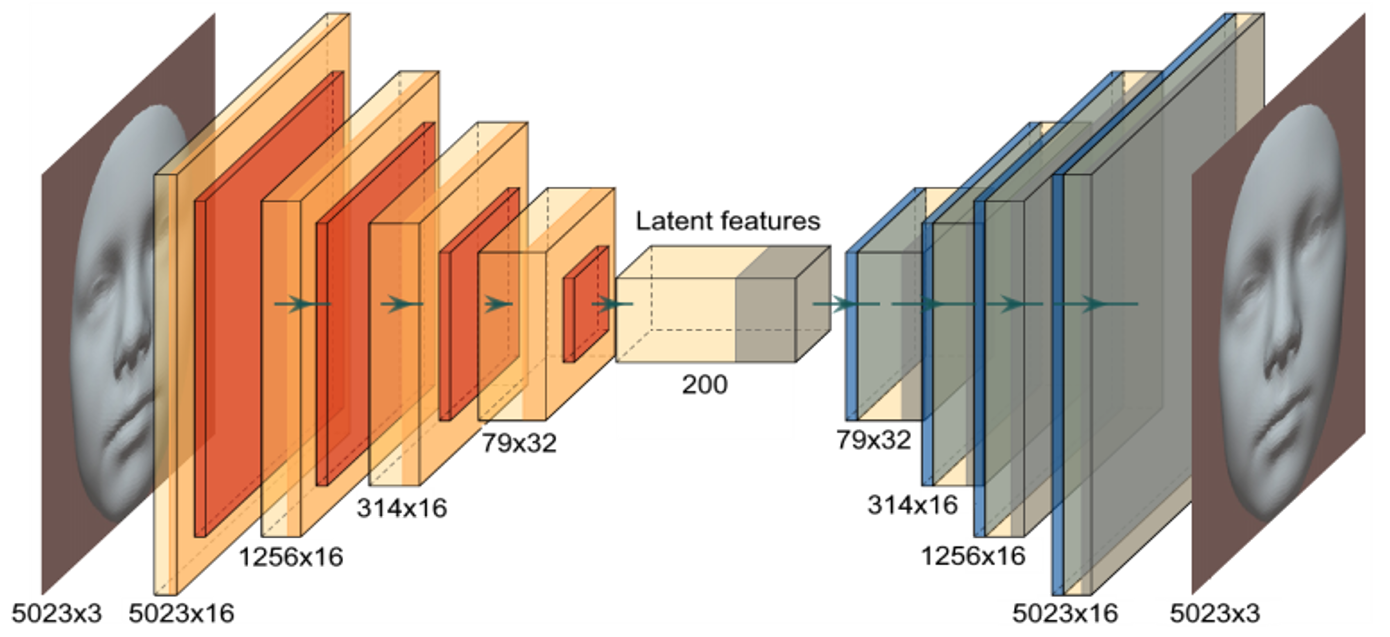
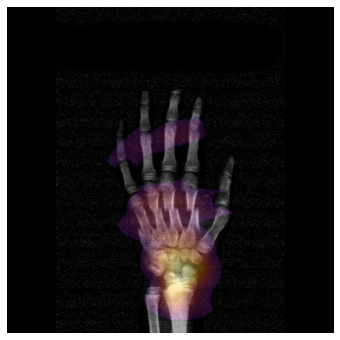
The group operates across the full pipeline: harmonizing complex data, building models with clear evaluation logic, interpreting outputs in genetic and phenotypic terms, and releasing software that others can run. Strength is not “methods for their own sake,” but end-to-end rigor—how a question is framed in a cohort, how bias is handled, and how results connect back to biology and practice.
We develop open-source, Python-centric packages and reproducible pipelines so that methods can be explored, taught, and reused—across the ComPopBio organization and personal repositories.
An end-to-end, open-source mesh processing tool for 3D craniofacial analysis. Transforms raw 3D images into harmonized meshes with automated cephalometric extraction and registration.
Official pipeline for conducting Federated GWAS (C-GWAS) using AI-based phenotyping on complex traits.
Codebase for AI-based association analysis in medical imaging, utilizing latent-space geometric confounder correction.
Python package to analyze and interface with gene expression data from the Allen Human Brain Atlas.
Pipeline for voxel-based morphometry and interactive visualization tools for high-dimensional structural MRI analysis.
A light and fast pure Python parser for the BGEN format, optimizing genomic data handling.
We lead and coordinate within international research infrastructures, not only contribute analyses. The Machine Learning working group in CHARGE and bioinformatics leadership in GEMSTONE set shared standards for how AI is applied across cohorts. Partnerships span ENIGMA, eQTLGen, EADB, and EU COST networks, connecting genomics, imaging, and translational questions across countries. Within Erasmus MC, the program bridges Epidemiology and Radiology & Nuclear Medicine through embedded collaboration with BIGR, while managing the research cluster at the Department of Epidemiology. Dr. Roshchupkin is a co-founder of SQuAIRe (Society for Quantitative Artificial Intelligence Research) and serves as Programme Manager for AI Strategy at UMCNL, contributing to imaging strategy and women’s health research leadership. This ecosystem connects detailed cohort data in Rotterdam with international efforts, enabling reproducible and comparable research across sites.
Beyond peer-reviewed outputs, we connect population biology and machine learning research to a broader audience through a public podcast on healthcare, aging, and AI—translating cohort science into accessible conversations for researchers, clinicians, and curious listeners.
Interested in collaboration, open positions, or joining the Computational Population Biology group? We welcome inquiries from prospective PhD candidates, postdocs, research engineers, and academic partners whose work aligns with interpretable AI, imaging genetics, and population multi-omics.
Over the long term, we aim for a tighter loop between population evidence and clinical utility: models that are portable, interpretable, and grounded in mechanism, trained in settings that respect privacy and diversity. Success is measured by better understanding of disease architecture, fairer and more reliable tools for risk and progression, and a research culture where data, methods, and translation advance together.